Should humans still review your code?
10/03/26
Human code review is no longer necessary?
It's October 3rd 2026, and LinkedIn AI enthusiasts are hard at work spamming variants of this assault on high-effort software.
I guess the reasoning goes that every conceivable coding problem has been solved by repeated LLM (language learning model) prompts? Even the deterministic ones, which can't be reliably accomplished by non-deterministic tools? Also, something about infinite tokens.
Not the kind you can use at Chuck E. Cheese. 🐁
We can show this is demonstrably false if there's at least one issue LLMs cannot consistently solve by human-free code regeneration. Is there something they definitely can't do without an expert reviewing their output? If so, then caring about quality remains necessary. I can't believe I had to write that.
Anyway, where are LLMs lacking? You guessed it. Anything concerning accessible frontends.
The evidence is overwhelming that the world's biggest tech companies trained their models on maliciously bad, inaccessible code. Don't believe me? If you're a junior web dev knowledgeable about accessibility, you could've done better than this Google AI generated search for beans.
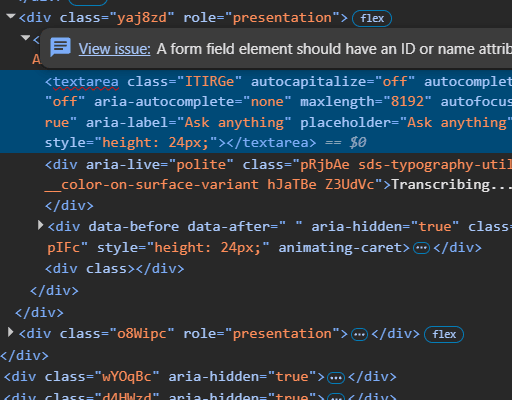
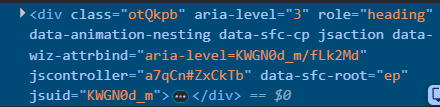
Whether it's random <div> elements with aria roles and attributes that should be semantic HTML or inaccessible form <input> elements, you're always in for a cringeworthy a11y (accessibility) experience examining Google's search markup.
If Google - the best of the best - is serving WCAG (Web Content Accessibility Guidelines) violating slop to millions of users everyday, the odds are exceedingly slim whatever model you've opted for is a superior experience. In absence of human review and necessary human adjustments, agent-only web UI just doesn't work out of the box for people using keyboards, screenreaders and other assistive technologies.
What are the limits of automation?
Current estimates of automation perceivable WCAG issues range from 20-30%. And yet, plenty of accessibility defects are not machine detectable. A 100% Google Lighthouse score does not mean absence of issues. Even if you're convinced that someday LLMs will improve, that doesn't excuse uncritically accepting agent-only UI output at present knowing it's unusable for countless individuals.
AI-first should not be synonymous with discriminatory, but I'm regrettably forced to deem it so until companies start taking their legal and ethical responsibilities to their customers seriously. I guess we'll need more precedents like accessiBe getting sued for there to be real change.
As always, I am not anti AI. Use LLMs when it's more efficient to automate en-masse, doesn't result in a rancid user experience and when the task does not necessitate determinism nor critical human judgement.
Just don't let anyone with a I Hate Quality
t-shirt and a Gemini shrine in their bedroom near your web UI.